
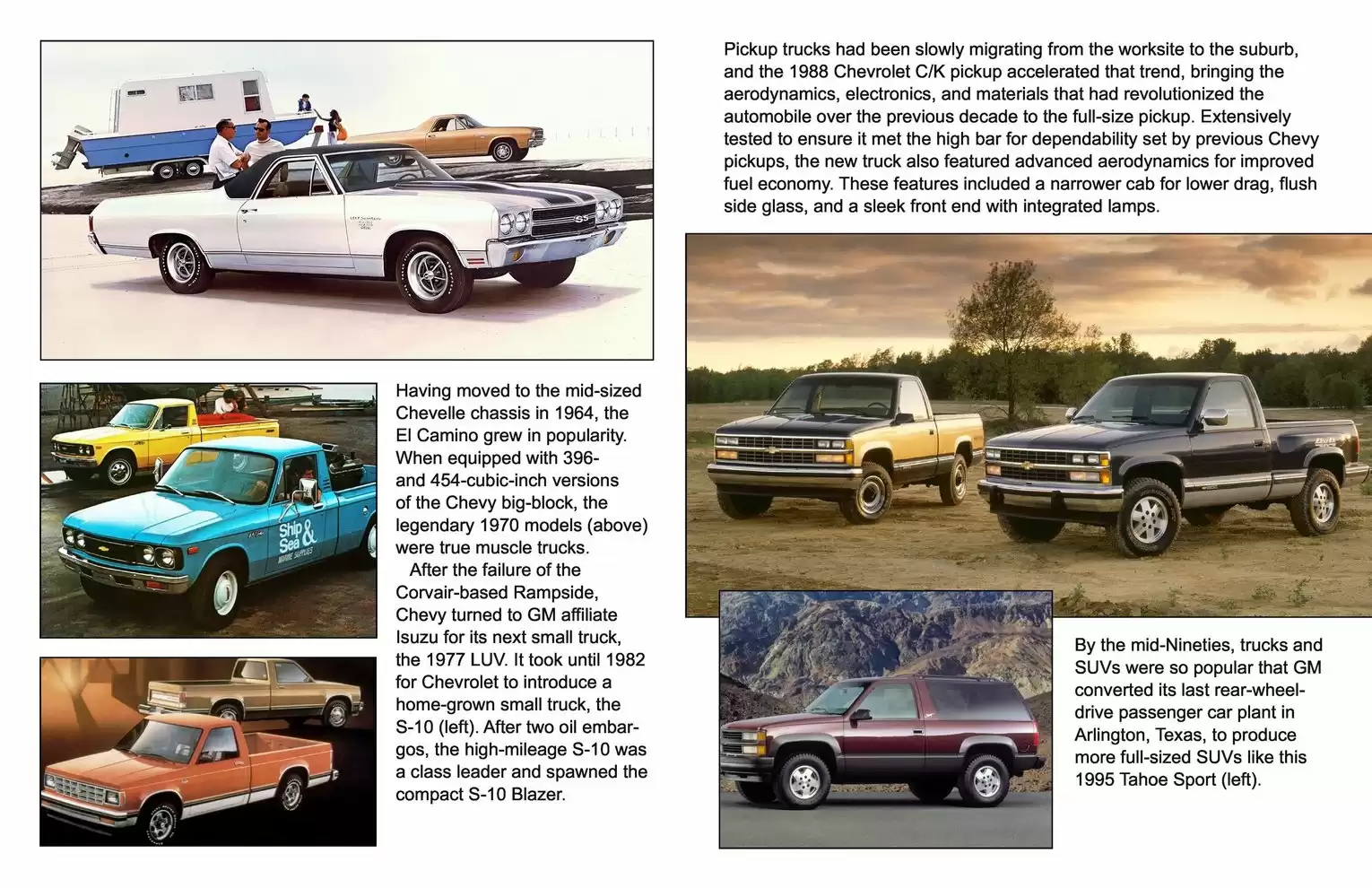
Having moved to the mid-sized Chevelle chassis in 1964, the El Camino grew in popularity. When equipped with 396- and 454-cubic-inch versions of the Chevy big-block, the legendary 1970 models (above) were true muscle trucks. After the failure of the Corvair-based Rampside, Chevy turned to GM affiliate Isuzu for its next small truck, the 1977 LUV. It took until 1982 for Chevrolet to introduce a home-grown small truck, the S-10 (left). After two oil embargos, the high-mileage S-10 was a class leader and spawned the compact S-10 Blazer.
Pickup trucks had been slowly migrating from the worksite to the suburb, and the 1988 Chevrolet C/K pickup accelerated that trend, bringing the aerodynamics, electronics, and materials that had revolutionized the automobile over the previous decade to the full-size pickup. Extensively tested to ensure it met the high bar for dependability set by previous Chevy pickups, the new truck also featured advanced aerodynamics for improved fuel economy. These features included a narrower cab for lower drag, flush side glass, and a sleek front end with integrated lamps.
By the mid-Nineties, trucks and SUVs were so popular that GM converted its last rear-wheel-drive passenger car plant in Arlington, Texas, to produce more full-sized SUVs like this 1995 Tahoe Sport (left).
| Previous Page | Next Page |