
To many Porsche 911 purists, the last real 911 was built in 1989. It featured a shorter wheelbase than the 911s that followed, while still sporting the 911's legendary shape--a shape that evolved (some say, was diluted) in the years to come. Between 1989 and 1997, the 911 retained its air/oil-cooled flat six with its distinctive baritone growl. Yet it grew in size and complexity in response to tightened emission standards and increased mandated safety equipment.
The final nail in the coffin came in 1998, when the first water-cooled 911 reached our shores. Some thought it heresy.
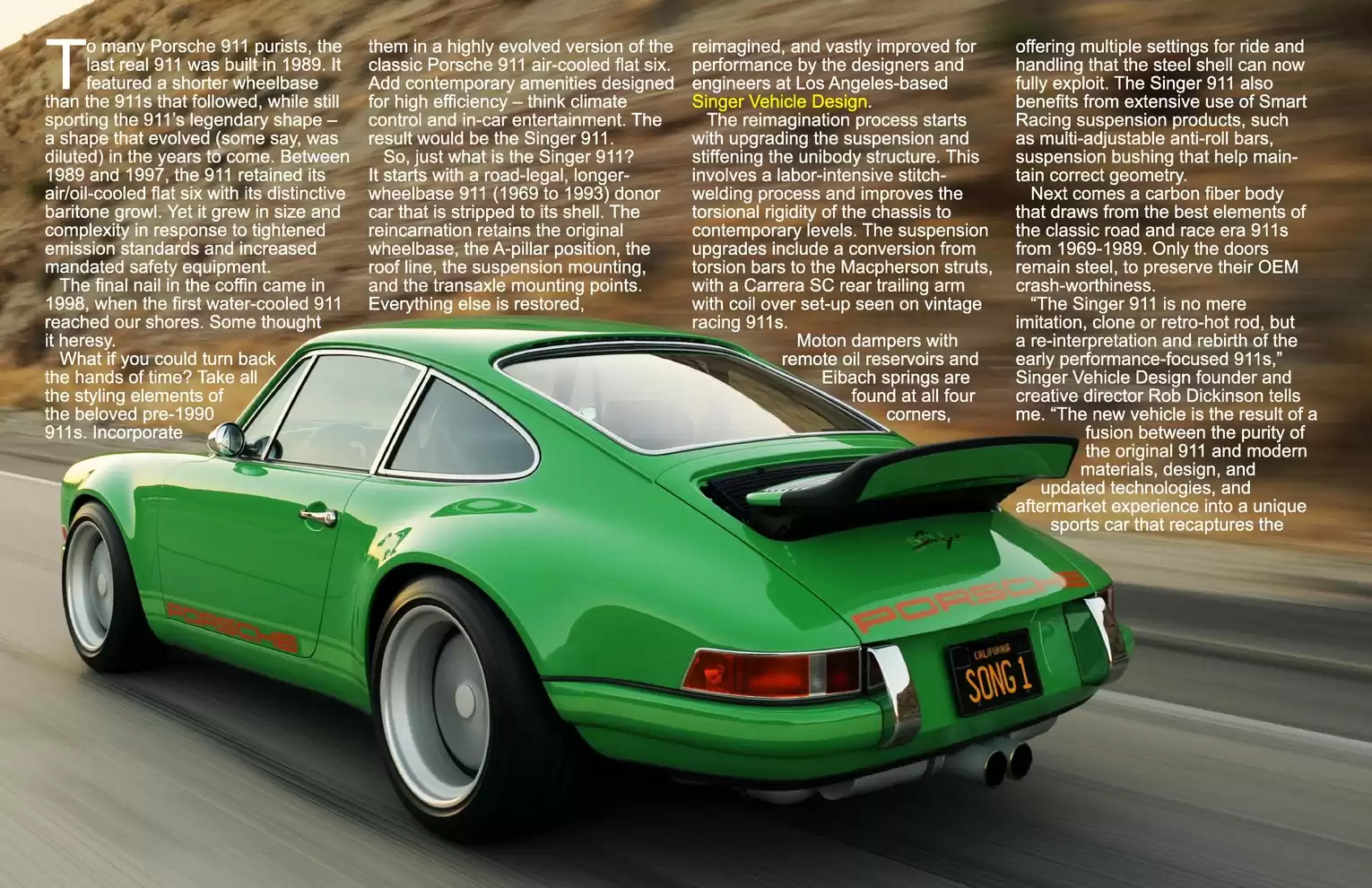
What if you could turn back the hands of time? Take all the styling elements of the beloved pre-1990 911s. Incorporate them in a highly evolved version of the classic Porsche 911 air-cooled flat six. Add contemporary amenities designed for high efficiency--think climate control and in-car entertainment. The result would be the Singer 911.
So, just what is the Singer 911? It starts with a road-legal, longer-wheelbase 911 (1969 to 1993) donor car that is stripped to its shell. The reincarnation retains the original wheelbase, the A-pillar position, the roof line, the suspension mounting, and the transaxle mounting points. Everything else is restored, reimagined, and vastly improved for performance by the designers and engineers at Los Angeles-based Singer Vehicle Design.
The reimagination process starts with upgrading the suspension and stiffening the unibody structure. This involves a labor-intensive stitch-welding process and improves the torsional rigidity of the chassis to contemporary levels. The suspension upgrades include a conversion from torsion bars to the Macpherson struts, with a Carrera SC rear trailing arm with coil over set-up seen on vintage racing 911s.
Moton dampers with remote oil reservoirs and Eibach springs are found at all four corners, offering multiple settings for ride and handling that the steel shell can now fully exploit. The Singer 911 also benefits from extensive use of Smart Racing suspension products, such as multi-adjustable anti-roll bars, suspension bushing that help main-tain correct geometry.
Next comes a carbon fiber body that draws from the best elements of the classic road and race era 911s from 1969-1989. Only the doors remain steel, to preserve their OEM crash-worthiness.
"The Singer 911 is no mere imitation, clone or retro-hot rod, but a re-interpretation and rebirth of the early performance-focused 911s," Singer Vehicle Design founder and creative director Rob Dickinson tells me. "The new vehicle is the result of a fusion between the purity of the original 911 and modern materials, design, and updated technologies, and aftermarket experience into a unique sports car that recaptures the
| Previous Page | Next Page |
Contents
Features:
Departments:
- Contributors
- Behind the Wheel: 2011 Hyundai Genesis
- Behind the Wheel: 2011 Chrysler 200 Limited
- Not Found on eBay
- Travel and Book Reviews
- Travel News
- Auto News
- Cruising Round-Up