
but TV, video games and other forms of passive entertainment."
The topic was addressed more recently at INTERACT 2011, an inter-national conference in Lisbon earlier this month on human-computer inter-action. One paper outlined the concept of an interactive rear-seat entertainment system called RiddleRide, similar to a quiz-show game but adaptable to the entire family and context aware (questions relate to what is seen outside the window and to the drive's destination).
No doubt, traveling after dark or through endless miles of cornfields is much less tedious with a favorite movie to cue up. And what better way to prepare for a visit to someplace like Colonial Williamsburg or Sea World than by watching a related video, whether fiction or a documentary?
If the first thing your kids do after buckling in is to power up the entertainment system, however, it is time to ask whether they've fallen into a lazy habit--or if their ability to amuse themselves has atrophied completely.
For most readers of this magazine, entertaining ourselves often requires just a road and a ride. Adventure is out there!, to quote the little boy from Up! Yet if your junior road-trippers are immersed in a constant barrage of electronic information and images, how can they hear or see that adventure? Wrapping themselves in the familiar--videos, games, Facebook friends--they might as well be on the sofa at home. Travel should be a time to think, literally, out of the iBox.
So, what to do? If plugging in is as natural to your kids as breathing, start with baby steps. What about an audiobook that everyone in the car agrees on and--gasp!--might even want to talk about? The kids might sulk at first, but I expect they'll survive.
If your children are still too young for their own cell phone numbers, then you're really in luck. You can foster that inherent curiosity about the unknown from the start--thus making their lives richer... and your own less whine-filled as they grow.
Consider how, when it comes to napping, new parents fall into two categories. Those who bedeck their doors with "Quiet--Baby's Sleeping!" signs and tiptoe around with the phone ringer on silent--and those who realize that previous centuries' high rates of infant mortality cannot be blamed on nap times interrupted by braying livestock and a dozen rowdy siblings tumbling around the cradle.
My ongoing, and completely unscientific, survey of families who travel with young children, suggests that parents in the latter category have a much easier time hitting the road with their wee offspring (both as small children and as they grow older).
Parents who shush everyone in earshot of their little darlings often find the little darlings quickly become incapable of going to bed anywhere but in the white silence of their own bedrooms. If that makes for a trying dinner out at the home of friends, imagine the frustration of hopping from one hotel to another every night.
Billy Joel sings a beautiful love song about the meaning of home that I thought of often when traveling with The Boy as an infant and toddler: Home can be the Pennsylvania Turnpike/ Indiana's early morning dew/ High up in the hills of California/ Home is just another word for you. When we talk about children needing a secure home in which to grow up, the word is not a synonym for house. It refers to a sense of emotional security, not just physical safety, and that security becomes a part of a child's identity. As we see too often on The Weather Channel, victims of natural disasters realize first hand what the rest of us are blessed to know only in theory--that one's home is more than four walls and a roof above; it is the wed-ding album found in the rubble, the once-beloved stuffed animal that managed to survive.
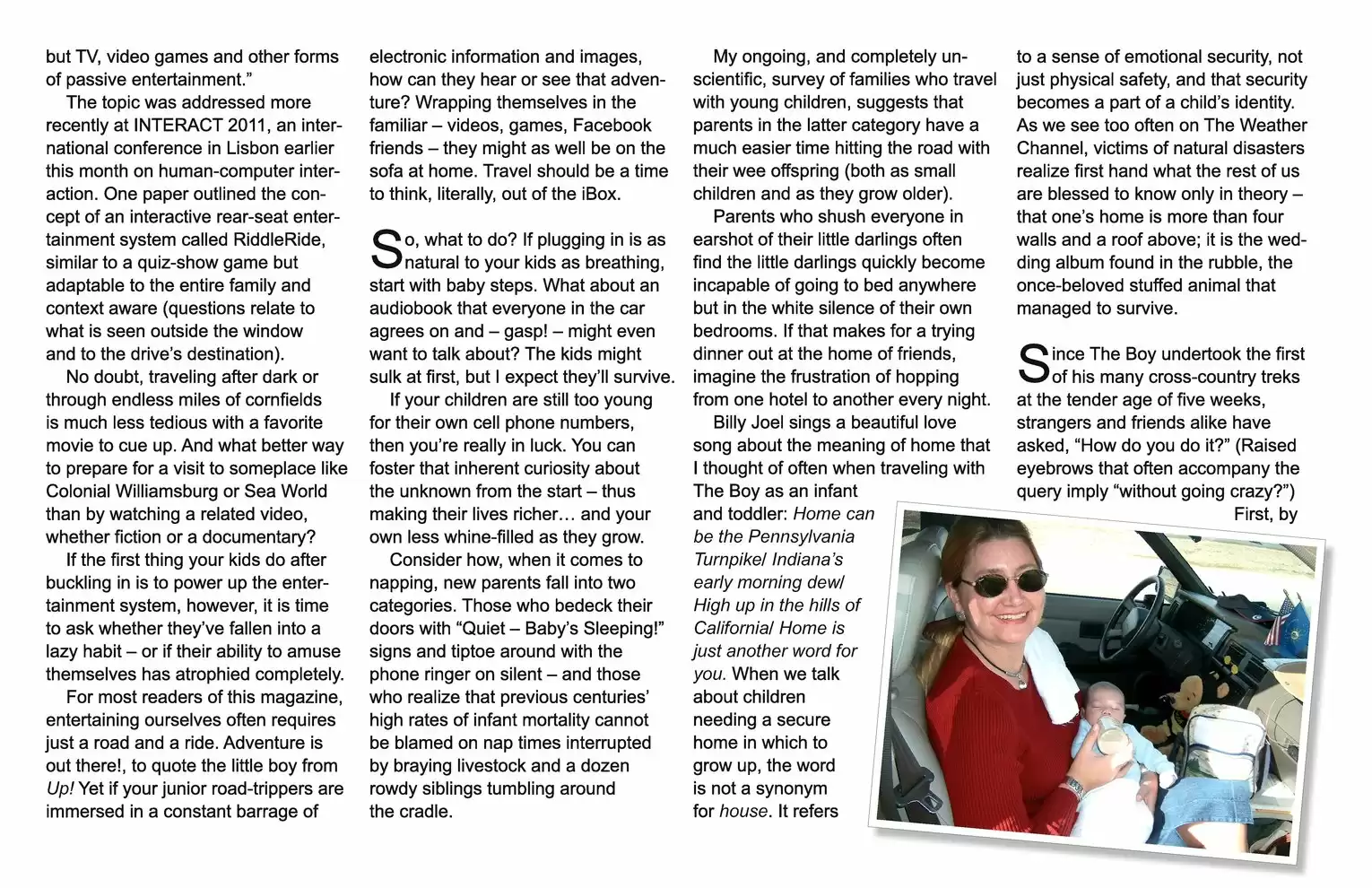
Since The Boy undertook the first of his many cross-country treks at the tender age of five weeks, strangers and friends alike have asked, "How do you do it?" (Raised eyebrows that often accompany the query imply "without going crazy?") First, by
| Previous Page | Next Page |