
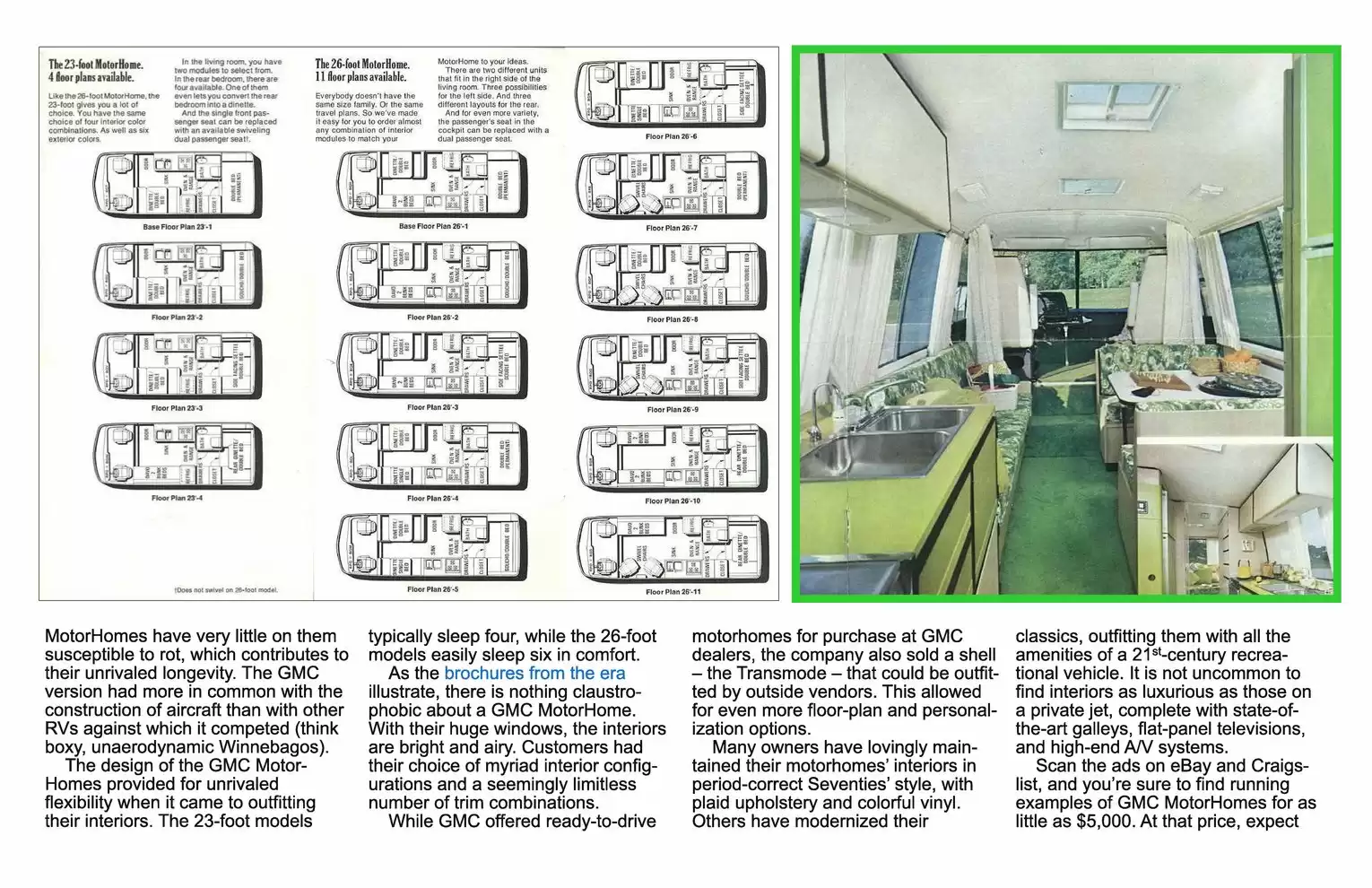
The design of the GMC MotorHomes provided for unrivaled flexibility when it came to outfitting their interiors. The 23-foot models typically sleep four, while the 26-foot models easily sleep six in comfort. As the brochures from the era illustrate, there is nothing claustrophobic about a GMC MotorHome. With their huge windows, the interiors are bright and airy. Customers had their choice of myriad interior configurations and a seemingly limitless number of trim combinations.
While GMC offered ready-to-drive motorhomes for purchase at GMC dealers, the company also sold a shell--the Transmode--that could be outfitted by outside vendors. This allowed for even more floor-plan and personalization options.
Many owners have lovingly maintained their motorhomes' interiors in period-correct Seventies' style, with plaid upholstery and colorful vinyl. Others have modernized their classics, outfitting them with all the amenities of a 21st-century recreational vehicle. It is not uncommon to find interiors as luxurious as those on a private jet, complete with state-of-the-art galleys, flat-panel televisions, and high-end A/V systems.
Scan the ads on eBay and Craigslist, and you're sure to find running examples of GMC MotorHomes for as little as $5,000. At that price, expect
| Previous Page | Next Page |
Contents
Features:
Departments:
- Contributors
- Behind the Wheel: 2011 Hyundai Genesis
- Behind the Wheel: 2011 Chrysler 200 Limited
- Not Found on eBay
- Travel and Book Reviews
- Travel News
- Auto News
- Cruising Round-Up