
tea lotions and soaps, I find a fabulous little tearoom. The Lekkerbekkie Teekamer serves the best chicken pie you are ever likely to find. But it is the Redbush Tea factory that draws me.
"It's still made in exactly the same way as it was by the Malays," explains Brian Salomo of Wupperthal Original Small Farms Co-operative. "And it's still the only herbal tea produced using a simple fermentation process."
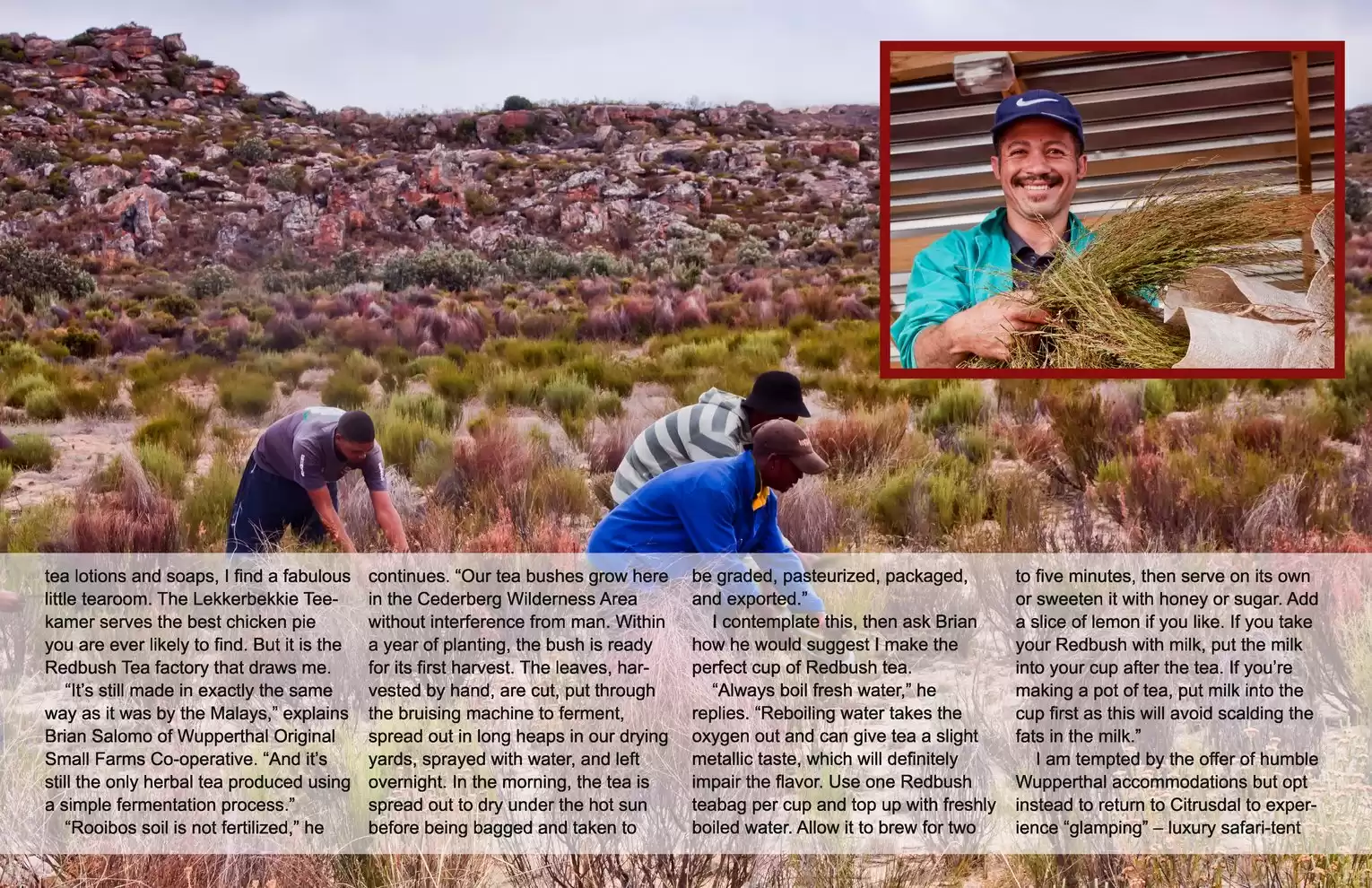
"Rooibos soil is not fertilized," he continues. "Our tea bushes grow here in the Cederberg Wilderness Area without interference from man. Within a year of planting, the bush is ready for its first harvest. The leaves, harvested by hand, are cut, put through the bruising machine to ferment, spread out in long heaps in our drying yards, sprayed with water, and left overnight. In the morning, the tea is spread out to dry under the hot sun before being bagged and taken to be graded, pasteurized, packaged, and exported."
I contemplate this, then ask Brian how he would suggest I make the perfect cup of Redbush tea.
"Always boil fresh water," he replies. "Reboiling water takes the oxygen out and can give tea a slight metallic taste, which will definitely impair the flavor. Use one Redbush teabag per cup and top up with freshly boiled water. Allow it to brew for two to five minutes, then serve on its own or sweeten it with honey or sugar. Add a slice of lemon if you like. If you take your Redbush with milk, put the milk into your cup after the tea. If you're making a pot of tea, put milk into the cup first as this will avoid scalding the fats in the milk."
I am tempted by the offer of humble Wupperthal accommodations but opt instead to return to Citrusdal to experience "glamping"--luxury safari-tent
| Previous Page | Next Page |