
"Historically, it was used by the Khoisan Bushmen as herbal medicine and later by the Malay slaves, brought to the Cape by the Dutch settlers. It was later commercialized by Wupperthal's missionaries, who saw that the Malays were making a tasty and aromatic drink by fermenting the leaves of the bush. Since then, Redbush has played a large part in everyday South African life, with many scientific studies being made of its health-giving properties."
I consider my cup. The red drink has a distinctive aroma and clean, refreshing taste. It is a sweet, slightly nutty tea, hugely popular in Western countries, particularly among health-conscious consumers, who appreciate its high level of antioxidants, its lack of caffeine, and its extremely low tannin levels.
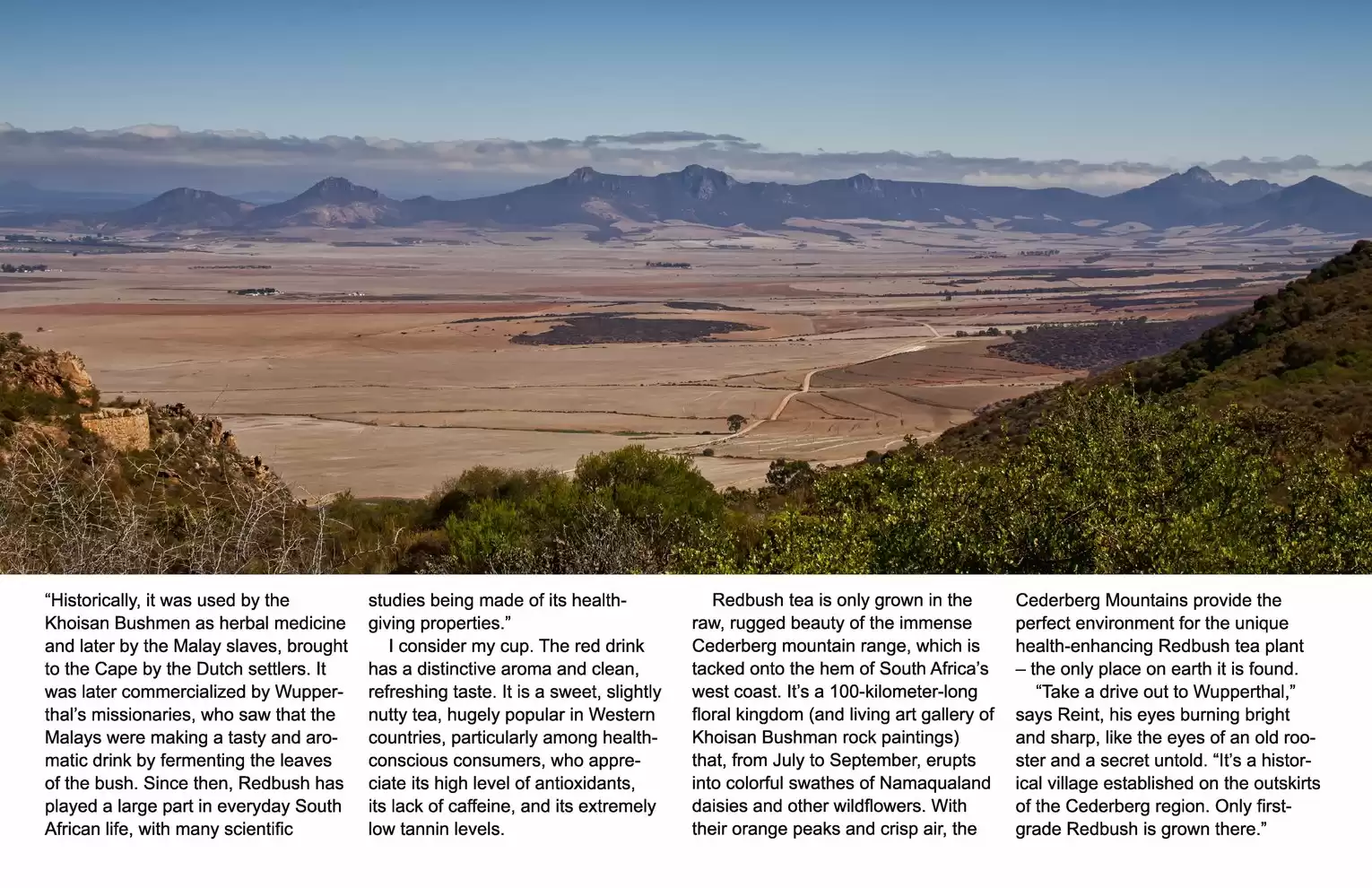
Redbush tea is only grown in the raw, rugged beauty of the immense Cederberg mountain range, which is tacked onto the hem of South Africa's west coast. It's a 100-kilometer-long floral kingdom (and living art gallery of Khoisan Bushman rock paintings) that, from July to September, erupts into colorful swathes of Namaqualand daisies and other wildflowers. With their orange peaks and crisp air, the Cederberg Mountains provide the perfect environment for the unique health-enhancing Redbush tea plant--the only place on earth it is found.
"Take a drive out to Wupperthal," says Reint, his eyes burning bright and sharp, like the eyes of an old rooster and a secret untold. "It's a historical village established on the outskirts of the Cederberg region. Only first-grade Redbush is grown there."
| Previous Page | Next Page |